The Science of Napping: How to Nap Without Wrecking Your Sleep
Learn how nap length and timing affect alertness and nighttime sleep, and how to build a nap into your day without paying for it later.
Sponsored
Why Your Body Wants a Nap in the First Place
That drowsy feeling you get in the early afternoon isn’t a sign of weakness or a bad night’s sleep alone. It’s built into your biology. You have an internal clock, sometimes called your circadian rhythm, that regulates alertness throughout the day. Most people experience a natural dip in energy roughly seven to nine hours after waking, regardless of how well they slept the night before. This is why the midafternoon slump feels so universal, whether you’re a night owl or an early riser.
At the same time, a substance called adenosine builds up in your brain the longer you’re awake. Think of it as a kind of sleep pressure that accumulates hour by hour. A short nap can temporarily clear some of that pressure, which is part of why napping can leave you feeling sharper. Understanding these two forces, your internal clock and your building sleep pressure, helps explain both why naps work and why timing them matters so much.
The Sweet Spot: How Long Should You Nap?
Nap length matters more than most people realize, because sleep moves through stages, and where you land when you wake up determines how you’ll feel afterward.
Short naps (10 to 20 minutes) keep you in the lighter stages of sleep. You drift off, rest briefly, and wake up relatively easily. These naps are often called power naps, and they tend to boost alertness and mood without leaving you groggy. For most people who just need a quick recharge before a meeting or a drive, this is the safest range to aim for.
Medium naps (30 to 60 minutes) run the risk of waking you in the middle of deep sleep. This can lead to a groggy, disoriented feeling known as sleep inertia, which can last anywhere from a few minutes to half an hour. If you’ve ever woken from a nap feeling worse than before you closed your eyes, this is likely why.
Longer naps (around 90 minutes) allow you to complete a full sleep cycle, moving through light sleep, deep sleep, and a period of dream sleep before waking. Because you’re waking at the end of a cycle rather than in the middle of one, these naps often feel more refreshing despite taking longer. They can also support memory and learning, since a full cycle includes the stages of sleep associated with processing information. The tradeoff is time. Not everyone has 90 minutes to spare in the middle of a day.
For most adults, a 20-minute nap offers the best balance of benefit and convenience. It’s long enough to reduce sleepiness and sharpen focus, but short enough to avoid grogginess and keep your schedule intact.
Timing: When You Nap Matters as Much as How Long
Even a perfectly timed nap length can backfire if it happens at the wrong time of day. The general guidance is to nap in the early to mid afternoon, roughly six to eight hours after you wake up. For someone who gets up at seven in the morning, that often lands somewhere between one and three in the afternoon.
This window tends to align with your body’s natural dip in alertness, so you’re working with your biology rather than against it. Napping too early, right after waking, offers little benefit because your sleep pressure hasn’t built up yet. Napping too late in the day, especially after four or five in the afternoon, can interfere with your ability to fall asleep at bedtime, since it reduces the sleep pressure your body needs to wind down at night.
If you’re dealing with a specific need, like preparing for a night shift or recovering from a poor night’s sleep, the ideal timing can shift. The core principle stays the same: the closer a nap gets to your normal bedtime, the more likely it is to chip away at your nighttime sleep.
Protecting Your Nighttime Sleep
Naps are meant to be a supplement to good nighttime sleep, not a replacement for it. If you find yourself needing long or frequent naps just to get through the day, that’s worth paying attention to. It may be a sign that your nighttime sleep isn’t meeting your body’s needs, whether due to inconsistent bedtimes, an uncomfortable sleep environment, or an underlying issue like insomnia or sleep apnea. In those cases, it’s worth talking with a healthcare professional rather than relying on naps to patch over the problem.
For most healthy adults without underlying sleep issues, an occasional short nap is unlikely to cause problems. But if you notice that napping is consistently making it harder to fall asleep at night, that’s useful feedback. Try shortening the nap, moving it earlier in the day, or skipping it altogether for a few days to see whether your nighttime sleep improves.
Making Napping Work for You
A few practical habits can help you get the most out of a nap:
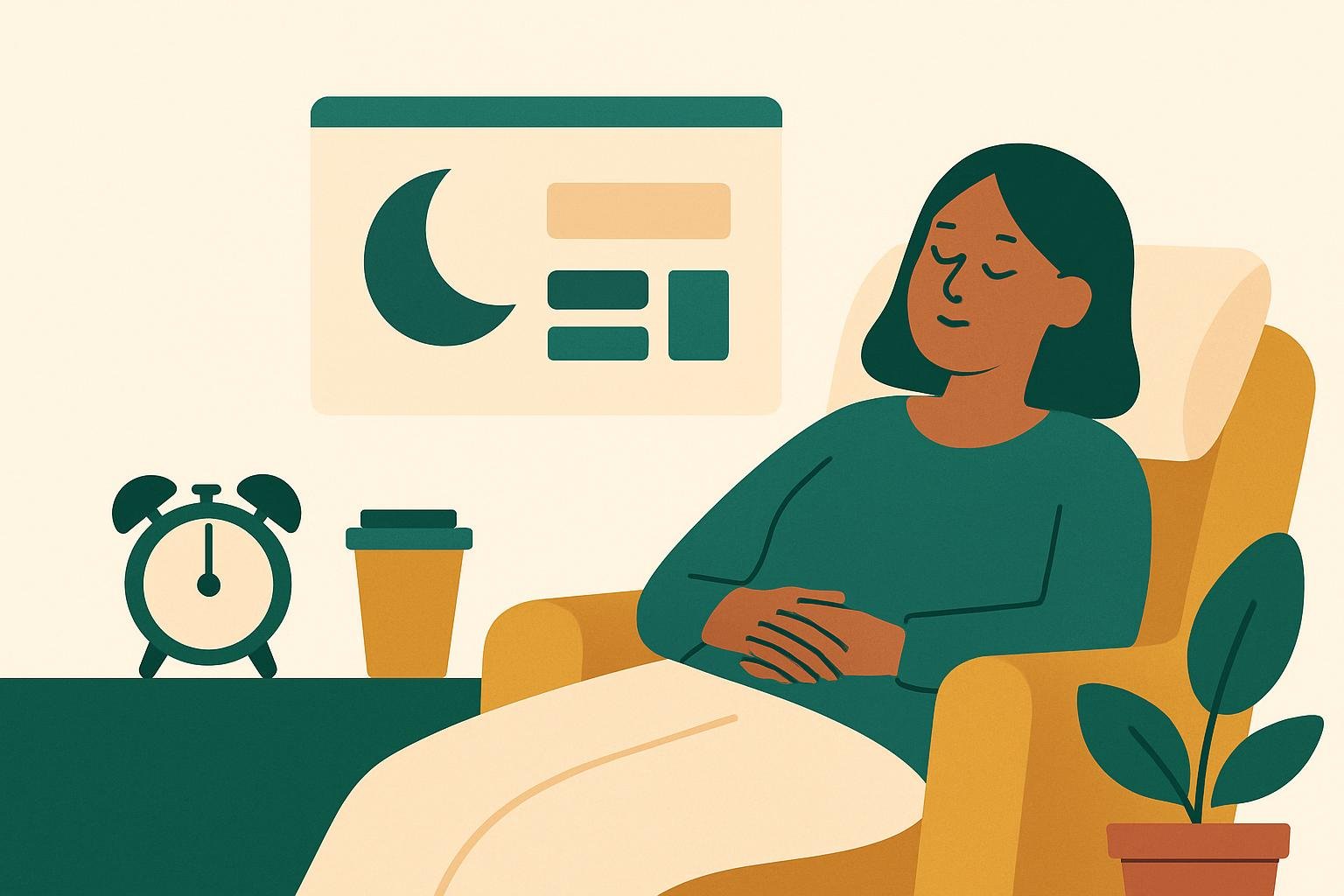
- Set an alarm, especially if you’re aiming for a short nap. It’s easy to drift past 20 minutes without realizing it.
- Find a quiet, dim, and reasonably cool space. Your body associates darkness and cooler temperatures with sleep, which can help you fall asleep faster.
- Give yourself a few minutes to fully wake up before jumping into something demanding, particularly after a longer nap.
- Pay attention to how your body responds. Some people feel refreshed after 15 minutes, while others need closer to 25 to feel the benefit. Your ideal nap length may take some experimentation to find.
Naps aren’t a cure-all, and they’re not necessary for everyone. But when used thoughtfully, with attention to both length and timing, a nap can be a simple, low-cost way to support your alertness and mood without undermining the sleep you get at night.
Remember: this guide is general information, not professional advice for your specific situation. For decisions with real stakes, check with a qualified professional.