Why Rest Days Matter: Recovery, Muscle Repair, and Overtraining
Learn why rest and recovery days are just as important as workouts for muscle repair and performance, plus how to recognize the warning signs of overtraining.
Sponsored
The Workout Is Only Half the Story
It’s tempting to think that progress happens in the gym, during those sweaty, heart-pounding minutes on the treadmill or under a barbell. But the truth is a little less flashy: your muscles don’t actually get stronger while you’re exercising. They get stronger afterward, while you rest.
When you lift weights or push through a hard cardio session, you create tiny amounts of stress and microscopic damage in your muscle fibers. This isn’t a bad thing. It’s actually the trigger your body needs to adapt. But the adaptation, the rebuilding of muscle tissue into something slightly stronger than before, happens during recovery. Skip that part, and you’re left with the damage but none of the payoff.
What Actually Happens During Recovery
Think of a workout as sending your body a request: “prepare for more of this next time.” Recovery is when your body fulfills that request. Blood flow delivers nutrients and oxygen to repair muscle fibers. Your nervous system, which also takes a hit during intense training, gets a chance to reset. Hormone levels that regulate muscle growth and stress response return to a more balanced state.
This repair process takes time, and it varies depending on the type and intensity of exercise you did. A light walk might require almost no recovery time. A heavy leg day or an intense interval session, on the other hand, might need a day or two before those muscles are ready to work hard again.
Sleep plays a starring role in all of this. Much of the physical repair work your body does happens during deep sleep stages, which is one reason why consistently shortchanging your sleep can quietly undermine your fitness progress even if your workouts are solid.
Why Skipping Rest Can Backfire
It seems logical that more exercise should equal more results. But your body doesn’t work on a simple more-is-better formula. If you keep training hard without adequate recovery, you can actually move backward instead of forward.
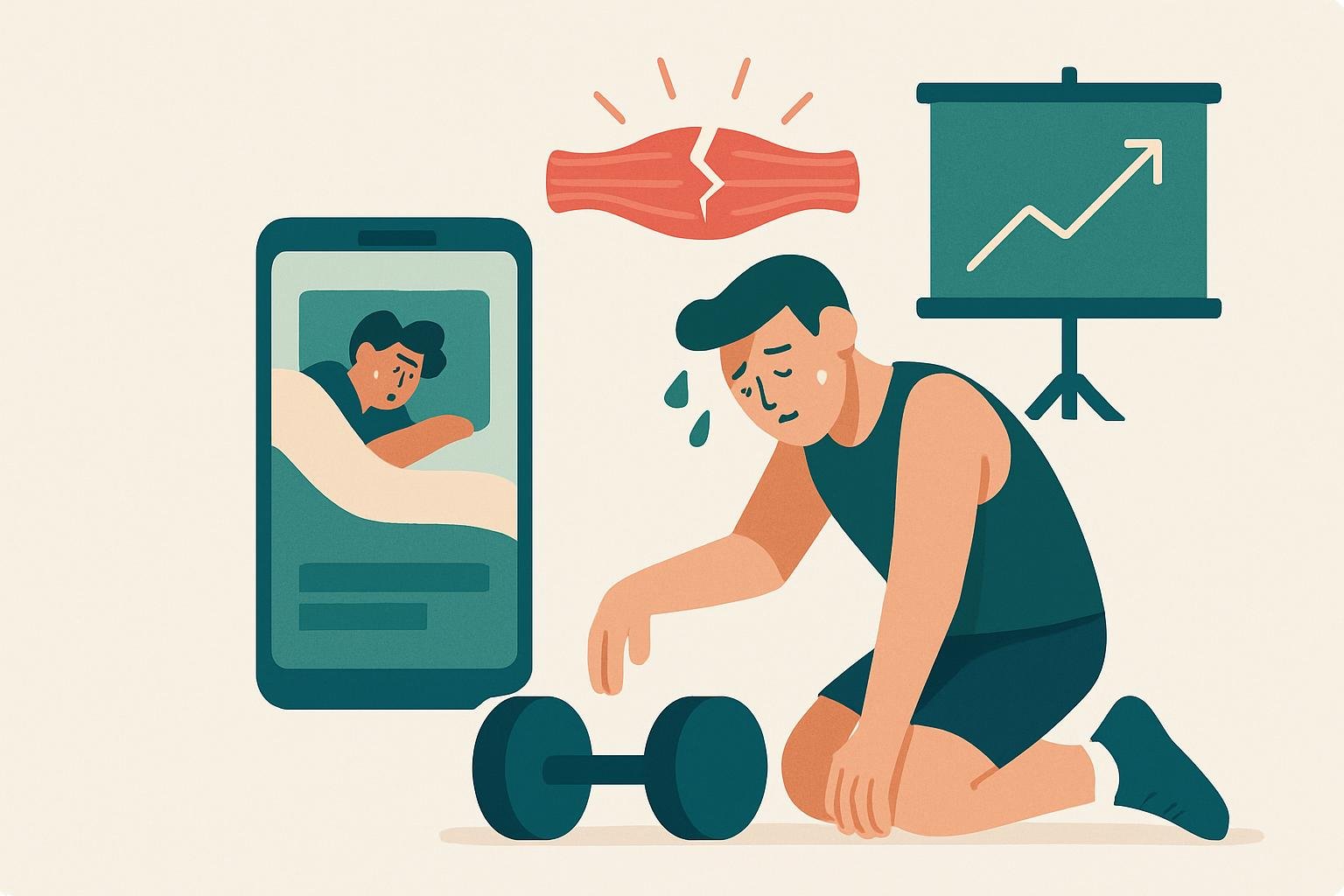
Without rest, muscles don’t get the chance to fully repair before the next stress is applied. Over time, this can lead to a decline in strength and endurance rather than the improvement you’re working for. Your performance may plateau or even drop, leaving you frustrated despite putting in more effort, not less.
Recovery days aren’t a break from progress. They’re part of how progress happens.
Signs You Might Be Overtraining
Overtraining happens when the balance between exercise and recovery tips too far toward exercise, for too long. It doesn’t happen overnight, and it looks different for everyone, but there are some common signals worth paying attention to.
- Persistent fatigue. Feeling tired even after a full night’s sleep, or noticing that your energy doesn’t bounce back the way it used to between workouts.
- Declining performance. Weights that used to feel manageable now feel unusually heavy, or your running pace has slowed despite consistent training.
- Trouble sleeping. Ironically, overtraining can interfere with sleep quality, even though your body needs that rest more than ever.
- Mood changes. Increased irritability, anxiety, or a general sense of being “off” can sometimes be tied to physical overtraining, since exercise and stress hormones are closely linked.
- Frequent illness or lingering soreness. If you’re getting sick more often than usual, or soreness from a workout sticks around much longer than it typically does, your immune system and muscles may be struggling to keep up.
- Loss of motivation. A workout routine you used to enjoy suddenly feels like a chore, which can sometimes be your body’s way of signaling it needs a break.
If you notice several of these signs together, especially if they persist for more than a week or two, it’s worth scaling back your training intensity or frequency. If symptoms are severe or don’t improve with rest, checking in with a healthcare professional is a reasonable next step, since fatigue and mood changes can also stem from other causes.
Building Recovery Into Your Routine
Rest doesn’t have to mean doing nothing. Active recovery, like a gentle walk, light stretching, or an easy bike ride, can support blood flow and help you feel less stiff without adding significant stress to your muscles.
A reasonable starting point for many people is to schedule at least one to two full rest or active recovery days per week, and to give specific muscle groups a day or two between intense training sessions. That said, the right balance depends on your fitness level, the intensity of your workouts, and how your body responds, so it’s fine to adjust based on how you feel rather than following a rigid formula.
Paying attention to sleep, nutrition, and hydration also supports recovery just as much as taking a day off from the gym does. These aren’t separate from your fitness plan. They’re part of it.
The Bigger Picture
Rest days can feel unproductive, especially if you’re used to measuring progress by how hard you push yourself. But recovery is where the actual gains happen. Treating rest as a essential part of your training, not an afterthought, can help you build strength more consistently and avoid the frustrating cycle of overtraining and burnout.
Remember: this guide is general information, not professional advice for your specific situation. For decisions with real stakes, check with a qualified professional.